
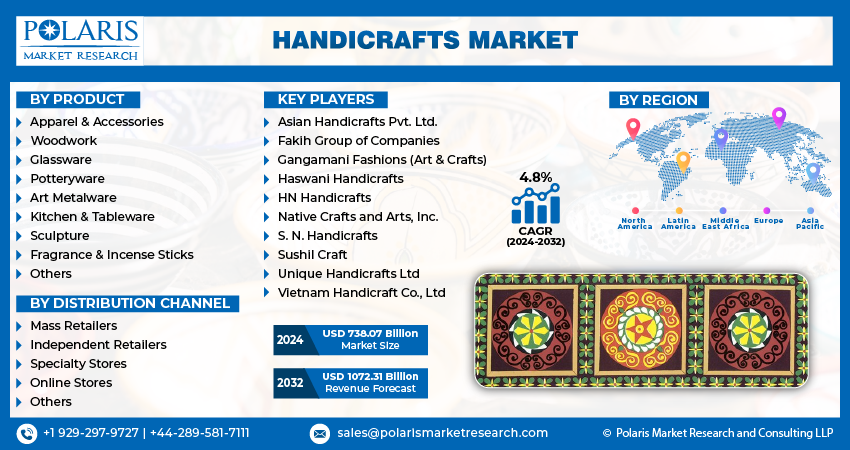
The global handicrafts market is expected to reach $1,072.31 billion by 2032, growing at a CAGR of 4.8% from 2023 to 2032. Handicrafts, which encompass a wide variety of items created by skilled artisans using traditional methods and tools, continue to gain popularity due to their unique, culturally rich, and eco-friendly appeal. The market for handicrafts is vast, encompassing sectors such as home décor, textiles, jewelry, gifts, and souvenirs. As consumer preferences shift towards handmade, sustainable, and ethically produced goods, the handicrafts market is experiencing significant growth globally.
Download Free Sample PDF Copy of the Report:
https://www.polarismarketresearch.com/industry-analysis/handicrafts-market/request-for-sample
Key Drivers of Market Growth
- Rising Demand for Unique and Personalized Products: Consumers today are increasingly looking for products that reflect their individuality and personal style. Handicrafts, with their uniqueness and authenticity, offer a special appeal. These products are often one-of-a-kind or produced in limited quantities, which further enhances their desirability among consumers seeking to differentiate themselves from mass-market options.
- Growing Awareness of Sustainability: As sustainability becomes a more significant consumer priority, handcrafted goods made from eco-friendly materials are increasingly popular. Many handicrafts are produced using natural, renewable resources and low-impact manufacturing processes, making them attractive to environmentally conscious consumers. This sustainability factor is driving the market’s growth, especially in the face of growing concerns over the environmental impact of fast fashion and mass production.
- Cultural Significance and Heritage Preservation: Handicrafts often represent a deep cultural heritage and are an essential part of preserving traditional craftsmanship. Many people are willing to pay a premium for products that represent cultural authenticity and heritage. Additionally, governments and organizations around the world are focusing on the preservation of handicraft traditions, providing support to artisans and helping expand their reach through exhibitions, online platforms, and global trade.
- Growth of E-Commerce and Online Platforms: The rise of e-commerce and digital marketplaces has revolutionized the way consumers access handicrafts. Platforms like Etsy, eBay, and Amazon Handmade allow artisans to reach a global audience, making it easier for consumers to purchase unique handcrafted items. This increased accessibility and visibility have opened up new opportunities for both small-scale artisans and large handicraft manufacturers.
Market Trends
- Fusion of Traditional and Modern Designs: A growing trend in the handicrafts market is the fusion of traditional crafting techniques with contemporary design elements. Many artisans are experimenting with combining traditional techniques with modern aesthetics, creating products that appeal to a broader, more diverse audience. This blend of old and new is particularly popular in home décor and fashion accessories.
- Customization and Personalization: The demand for customized and personalized handicrafts is rising. Whether it’s monogrammed gifts, custom-made jewelry, or tailored home décor items, consumers are increasingly looking for products that reflect their personality or tell a unique story. Personalization not only adds emotional value to the products but also creates an opportunity for artisans to offer exclusive, bespoke items that attract a premium price.
- Incorporation of Technology: While handicrafts are traditionally manual, many artisans are incorporating modern technology into their processes. This includes using digital tools for design, 3D printing for prototyping, and online platforms for marketing. Technology is helping artisans streamline their operations, reach new customers, and improve the quality of their products while maintaining their authenticity.
- Popularity of Eco-Friendly Handicrafts: Consumers are becoming more discerning about the environmental impact of the products they purchase. In response, the handicraft industry is focusing on using organic, recycled, and biodegradable materials in the creation of products. The appeal of eco-friendly items is particularly strong among millennials and Gen Z, who prioritize sustainability in their purchasing decisions.
Key Challenges
- Competition from Mass-Produced Goods: One of the biggest challenges facing the handicrafts market is the competition from mass-produced goods that are cheaper and more widely available. While handicrafts are valued for their uniqueness and quality, the cost of production is generally higher, which can limit their competitiveness in a market dominated by mass-produced items.
- Access to Global Markets: Although e-commerce platforms have made it easier for artisans to reach global markets, many artisans, especially in rural or developing regions, still struggle with access to international distribution channels. Issues such as lack of infrastructure, limited access to digital tools, and high shipping costs can pose significant barriers to expansion.
- Preserving Authenticity: As the demand for handicrafts grows, there is a risk that mass production techniques may be employed to meet this demand, which could compromise the authenticity and craftsmanship of the products. Ensuring that products remain true to their cultural roots while scaling production is a delicate balance that artisans and manufacturers must navigate.
Opportunities in the Handicrafts Market
- Expanding Presence in Emerging Markets: Developing countries, particularly in Asia, Africa, and Latin America, are witnessing rising middle-class populations with increasing disposable income. These regions represent significant growth opportunities for handicrafts, as consumers in these markets are becoming more inclined to purchase premium, culturally significant, and sustainable products.
- Collaboration with Fashion and Design Industries: Handicrafts are finding new opportunities in the fashion and interior design industries. Collaborations between artisans and fashion designers or home décor brands can create unique products that blend traditional craftsmanship with contemporary trends. These collaborations can help introduce handicrafts to new consumer segments and expand their appeal.
- Focus on High-End Luxury Handicrafts: There is a growing niche market for luxury handicrafts, with consumers willing to invest in high-quality, artisanal goods. These luxury items often combine traditional craftsmanship with rare or precious materials, creating products that cater to affluent buyers seeking unique, premium items.
- Government and NGO Support: Many governments and non-governmental organizations (NGOs) are investing in the promotion and protection of handicraft industries as a means of supporting local economies, preserving cultural heritage, and empowering artisans. This support could take the form of funding, training, marketing assistance, and access to international trade fairs, offering significant growth opportunities for the handicrafts sector.
Top Companies:
Understanding key players and their initiatives provides valuable insights into the competitive landscape and emerging opportunities in the market. Here are the top companies in the market:
- Asian Handicrafts Pvt. Ltd.
- Fakih Group of Companies
- Gangamani Fashions (Art & Crafts)
- Haswani Handicrafts
- HN Handicrafts
- Native Crafts and Arts, Inc.
- S. N. Handicrafts
- Sushil Craft
- Unique Handicrafts Ltd
- Vietnam Handicraft Co., Ltd
Country-Wise Insights:
- North America
- U.S.
- Canada
- Europe
- Germany
- UK
- France
- Italy
- Spain
- Russia
- Netherlands
- Asia Pacific
- China
- India
- Japan
- South Korea
- Indonesia
- Malaysia
- Latin America
- Argentina
- Brazil
- Mexico
- Middle East & Africa
- UAE
- Saudi Arabia
- Israel
- South Africa
The handicrafts market is poised for significant growth, driven by increasing consumer demand for unique, sustainable, and culturally rich products. As the market continues to evolve, key trends such as the fusion of traditional and modern designs, the growth of e-commerce, and a focus on eco-friendly materials are shaping the future of the industry. While challenges such as competition from mass-produced goods and limited access to global markets remain, the growing emphasis on customization, personalization, and luxury handicrafts presents ample opportunities for artisans and manufacturers to thrive in a competitive global marketplace. With increasing consumer preference for authenticity and sustainability, the handicrafts market is set to play a vital role in the global economy over the next decade.