
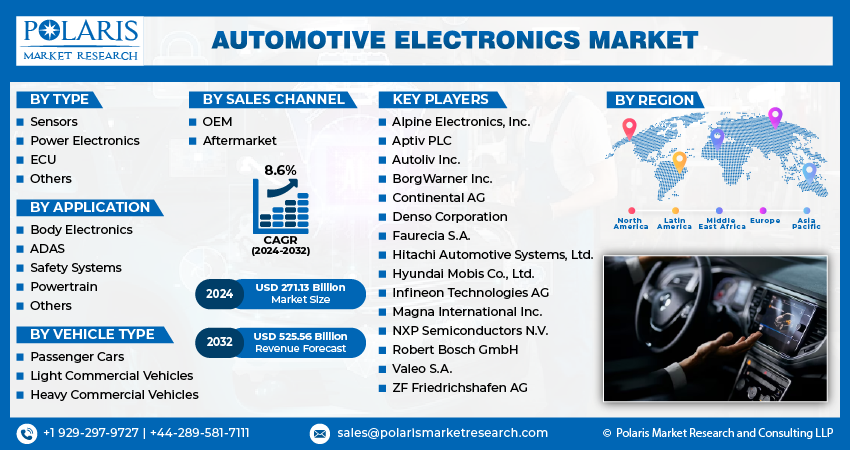
Automotive Electronics Market size is expected to grow from USD 271.13 billion in 2024 to USD 525.56 billion by 2032, exhibiting a CAGR of 8.6% during the forecast period.
Automotive electronics refers to the use of electronic systems, devices, and components in vehicles to enhance safety, comfort, efficiency, and performance. From basic components like sensors and actuators to advanced systems such as autonomous driving technologies, automotive electronics have become integral to modern vehicles.
The automotive electronics market has witnessed substantial growth over the past few years, driven by the increasing demand for advanced technologies, improved safety features, and the growing trend of electric and autonomous vehicles.
Market’s Growth Drivers
Several factors are fueling the growth of the automotive electronics market:
- Rising Demand for Electric Vehicles (EVs): The growing popularity of electric vehicles has significantly boosted the demand for automotive electronics. EVs require advanced battery management systems (BMS), electric power steering, and other electronic components to ensure optimal performance, energy efficiency, and safety.
- Advancements in Autonomous Driving: The development of autonomous vehicles has led to the increased use of sensors, cameras, radar, and LiDAR systems, all of which are essential components of automotive electronics. These technologies enable vehicles to navigate and make decisions without human intervention.
- Enhanced Safety Features: Consumer demand for advanced safety features such as lane-keeping assistance, automatic emergency braking, adaptive cruise control, and collision avoidance systems is driving the growth of automotive electronics. These systems rely heavily on sensors, radar, and camera-based technologies.
- Increased Focus on In-Vehicle Connectivity: With the rise of connected vehicles, automotive electronics are playing a crucial role in enabling seamless communication between the vehicle, the driver, and external devices. Technologies like 5G, IoT, and V2X (vehicle-to-everything) communication are transforming the way vehicles interact with their environment.
- Government Regulations and Standards: Stringent government regulations and safety standards aimed at reducing vehicle emissions, improving fuel efficiency, and enhancing safety have also contributed to the growth of automotive electronics. Regulatory bodies are mandating the inclusion of certain electronic systems in vehicles to ensure compliance with these standards.
Key Trends in Automotive Electronics
Several key trends are shaping the future of automotive electronics:
- Electric Powertrains and Battery Management Systems (BMS): As the automotive industry shifts toward electric mobility, the demand for electric powertrains and advanced battery management systems is increasing. These systems help optimize energy usage, monitor battery health, and extend the lifespan of electric vehicles.
- Advanced Driver Assistance Systems (ADAS): ADAS technologies, including adaptive cruise control, lane departure warning, and automated parking, are becoming more prevalent in vehicles. These systems rely on a combination of sensors, cameras, and radar to improve driver safety and convenience.
- In-Vehicle Infotainment and Connectivity: Modern vehicles are increasingly equipped with sophisticated infotainment systems, including touchscreens, voice recognition, and seamless integration with smartphones and other devices. The demand for enhanced connectivity and entertainment options is driving the growth of automotive electronics.
- Autonomous Vehicles: The race to develop fully autonomous vehicles is one of the most significant trends in the automotive electronics market. Advanced sensors, machine learning algorithms, and real-time data processing are crucial for enabling self-driving cars.
- Vehicle-to-Everything (V2X) Communication: V2X technology allows vehicles to communicate with each other and with infrastructure elements such as traffic lights and road signs. This technology is expected to improve traffic flow, reduce accidents, and enhance overall road safety.
- Lighting Systems and OLED Technology: LED and OLED lighting systems are becoming increasingly popular in automotive design due to their energy efficiency, durability, and ability to create visually striking designs. These lighting systems are used in both exterior and interior applications.
Research Scope
The research scope in the automotive electronics market is vast, covering various aspects such as technological advancements, market trends, consumer preferences, and regulatory developments. Key areas of focus for research include:
- Technological Innovation: Research is focused on developing new and advanced technologies, such as artificial intelligence (AI), machine learning, and edge computing, to enhance the capabilities of automotive electronics.
- Consumer Behavior and Preferences: Understanding consumer preferences for safety, connectivity, and convenience features is crucial for manufacturers to design products that meet market demands.
- Impact of Regulations: Research is also focused on understanding the impact of government regulations on the adoption and implementation of automotive electronics. This includes studying the regulatory frameworks surrounding electric vehicles, safety standards, and environmental regulations.
- Market Dynamics and Competition: Researchers are examining market dynamics, including the competitive landscape, market share analysis, and the role of key players in shaping the market.
- Sustainability and Environmental Impact: With the growing focus on sustainability, research is being conducted on the environmental impact of automotive electronics, including the recycling of electronic components and reducing the carbon footprint of production processes.
Market Key companies:
Understanding key players and their initiatives provides valuable insights into the competitive landscape and emerging opportunities in the market. Here are the top companies in the market:
- Alpine Electronics, Inc.
- Aptiv PLC
- Autoliv Inc.
- BorgWarner Inc.
- Continental AG
- Denso Corporation
- Faurecia S.A.
- Hitachi Automotive Systems, Ltd.
- Hyundai Mobis Co., Ltd.
- Infineon Technologies AG
- Magna International Inc.
- NXP Semiconductors N.V.
- Robert Bosch GmbH
- Valeo S.A.
- ZF Friedrichshafen AG
Market Segmentation
The automotive electronics market can be segmented based on various factors, including product type, application, vehicle type, and region.
Automotive Electronics, Type Outlook (Revenue – USD Billion, 2019 – 2032)
- Sensors
- Power Electronics
- ECU
- Others
Automotive Electronics, Application Outlook (Revenue – USD Billion, 2019 – 2032)
- Body Electronics
- ADAS
- Safety Systems
- Powertrain
- Others
Automotive Electronics, Vehicle Type Outlook (Revenue – USD Billion, 2019 – 2032)
- Passenger Cars
- Light Commercial Vehicles
- Heavy Commercial Vehicles
Automotive Electronics, Sales Channel Outlook (Revenue – USD Billion, 2019 – 2032)
- OEM
- Aftermarket
𝐂𝐥𝐢𝐜𝐤 𝐡𝐞𝐫𝐞 𝐭𝐨 𝐀𝐜𝐜𝐞𝐬𝐬 𝐭𝐡𝐞 𝐅𝐮𝐥𝐥 𝐑𝐞𝐩𝐨𝐫𝐭:
https://www.polarismarketresearch.com/industry-analysis/automotive-electronics-market
The automotive electronics market is poised for significant growth, driven by the increasing demand for electric vehicles, autonomous driving technologies, and enhanced safety features. The ongoing advancements in connectivity, electrification, and automation will continue to shape the market, creating new opportunities for manufacturers and suppliers. As technology continues to evolve, automotive electronics will play an increasingly important role in transforming the driving experience, improving safety, and contributing to a more sustainable future for the automotive industry.
Automotive Elec tronics Market size is expected to grow from USD 271.13 billion in 2024 to USD 525.56 billion by 2032, exhibiting a CAGR of 8.6% during the forecast period.