
Market Overview
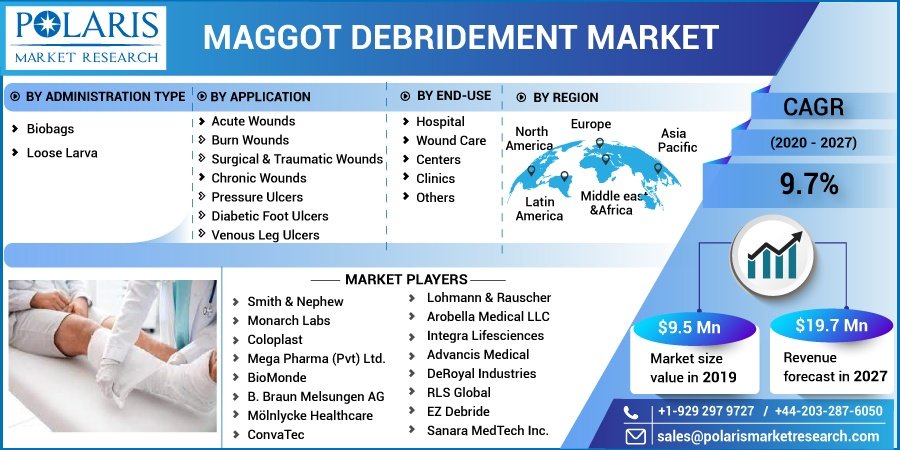
Once considered a niche and unconventional form of wound care, Maggot Debridement Market is now gaining mainstream recognition as an effective, evidence-based method for managing chronic wounds. According to the latest research by Polaris Market Research, the global maggot debridement market is projected to reach USD 19.7 million by 2027, growing at a compound annual growth rate (CAGR) of 9.7% during the forecast period.
Maggot debridement therapy involves the deliberate use of sterile larvae (typically of the Lucilia sericata fly) to clean non-healing wounds. These larvae selectively consume necrotic (dead) tissue and secrete enzymes with antimicrobial properties, thereby stimulating healing and reducing bacterial load. Although the concept is centuries old, MDT is now backed by rigorous clinical studies, and its acceptance is expanding, particularly as antibiotic resistance grows and traditional wound healing methods often fall short.
MDT has proven especially useful in treating diabetic foot ulcers, pressure sores, venous stasis ulcers, and infected post-surgical wounds. Its minimally invasive nature, low cost, and remarkable effectiveness make it a valuable adjunct or alternative to surgical debridement and chemical treatments.
As healthcare systems seek cost-effective and sustainable solutions for chronic wound care, the market for maggot debridement therapy is gaining momentum across developed and developing nations alike.
Market Growth Drivers
- Rising Prevalence of Chronic Wounds and Diabetes
Chronic wounds such as diabetic foot ulcers and pressure sores are becoming more common due to aging populations and the global rise in diabetes and obesity. The World Health Organization (WHO) estimates that over 422 million people live with diabetes globally, many of whom are at risk of developing foot ulcers. MDT offers a highly effective solution for removing necrotic tissue and promoting healing in these complex cases.
- Antibiotic Resistance Crisis
The global healthcare community is grappling with antibiotic resistance, which makes the treatment of infected wounds increasingly challenging. Maggots possess natural antimicrobial secretions that can combat resistant bacteria such as MRSA (Methicillin-resistant Staphylococcus aureus). Their role as a biological alternative to antibiotics is growing in relevance and driving adoption in hospitals and wound care centers.
- Growing Demand for Cost-Effective Treatments
MDT is significantly cheaper than surgical debridement and advanced wound care products. In healthcare systems where budget constraints are an issue, especially in developing nations, maggot therapy offers a high return on investment with proven clinical outcomes.
- Increasing Acceptance by Healthcare Professionals
Once met with skepticism, MDT is now being incorporated into clinical guidelines and gaining acceptance among surgeons, podiatrists, and wound care specialists. The U.S. Food and Drug Administration (FDA) approved maggots as a “medical device” in 2004, legitimizing the therapy and opening the door to wider adoption.
- Rising Geriatric Population
The elderly are more susceptible to chronic wounds due to impaired circulation, mobility limitations, and comorbidities. As the global geriatric population grows, so does the demand for innovative, less invasive wound care treatments like maggot therapy.
Key Trends in the Maggot Debridement Market
- Expansion of Bio-based and Natural Therapies
There is a noticeable shift in healthcare toward biological and nature-based treatments. Maggot debridement aligns perfectly with this trend, as it uses living organisms in a therapeutic context. This “return to nature” approach is gaining traction among both clinicians and patients seeking holistic care.
- Integration with Modern Wound Care Protocols
MDT is being used in combination with advanced wound dressings, negative pressure wound therapy (NPWT), and infection control protocols. This integration is enhancing the outcomes of comprehensive wound care strategies and reinforcing MDT’s relevance in modern medical settings.
- Customized and Contained Maggot Delivery Systems
Innovations in maggot packaging and application methods have made the therapy more patient-friendly. Modern delivery systems now use biobags or netted pouches that contain the larvae and prevent them from roaming freely, addressing aesthetic and psychological concerns.
- Increased Use in Homecare Settings
With healthcare systems increasingly focusing on decentralization and home-based care, MDT is being administered by trained nurses and caregivers outside of hospital settings. This shift supports better access, lower treatment costs, and improved patient compliance.
- Rising Number of Clinical Studies and Trials
Ongoing research is helping to clarify the biochemical mechanisms of maggot therapy and expand its indications. Numerous studies are underway to compare MDT with other wound care modalities, further solidifying its place in evidence-based medicine.
Research Scope
The market research surrounding the maggot debridement market covers:
- Market size estimates and forecasts across major geographies and industry segments
- Competitive landscape and company profiles, including product pipelines, financials, and strategic initiatives
- Technological and regulatory developments influencing product adoption and market entry
- End-user demand analysis, including behavioral insights and reimbursement trends
- Supply chain and manufacturing ecosystem, focusing on sourcing, breeding, sterilization, and logistics of maggots
This research scope is essential for manufacturers, healthcare providers, investors, and policy-makers aiming to understand the current and future dynamics of the maggot debridement market.
Market Segmentation
- By Type of Wound Treated
- Diabetic Foot Ulcers
A leading application area for MDT due to the high prevalence of diabetes and the complexity of ulcer management. MDT offers tissue-selective debridement, reducing the risk of further damage to healthy tissue.
- Pressure Ulcers (Bedsores)
Common in immobile and elderly patients, pressure ulcers benefit from MDT’s ability to cleanse infected, necrotic tissue and promote healing.
- Venous Leg Ulcers
MDT helps improve healing rates in chronic venous ulcers by removing slough and biofilm, allowing for better absorption of medications and dressings.
- Non-healing Surgical Wounds
For patients recovering from surgery, especially those with compromised immunity, MDT can effectively manage surgical site infections and aid in wound recovery.
- By Product Type
- Free-range (Loose) Larvae
The traditional form where sterile maggots are applied directly to the wound and allowed to move freely. Though effective, it requires careful containment and monitoring.
- Contained (Bagged) Larvae
These larvae are sealed in mesh pouches or biobags to limit movement while allowing excretions to treat the wound. This is increasingly preferred in clinical settings due to hygiene and patient comfort.
- By End-User
- Hospitals
Hospitals remain the primary users of MDT, especially in departments like wound care, surgery, and infectious disease management. The therapy is also used in ICUs and burn units.
- Wound Care Clinics
These specialized centers are expanding globally, driven by demand for chronic wound management. They are often early adopters of alternative therapies like MDT.
- Homecare Settings
The convenience and affordability of MDT make it suitable for at-home use under the supervision of trained caregivers or visiting nurses. This segment is expected to witness substantial growth in the coming years.
- Veterinary Clinics
Although primarily used for humans, maggot debridement is also being explored in veterinary medicine, especially for infected wounds in animals.
- By Region
- North America
A mature market driven by advanced healthcare infrastructure, supportive regulations (like FDA approval), and growing awareness of alternative wound care solutions.
- Europe
Europe, particularly the UK and Germany, has a long-standing history of MDT use. Increasing public healthcare expenditure and favorable reimbursement policies fuel growth.
- Asia-Pacific
Emerging economies like India and China are witnessing rapid growth due to rising diabetes cases, government healthcare reforms, and increased focus on affordable wound care.
- Latin America & Middle East
These regions are in the early adoption phase, but increasing investments in healthcare access and the burden of chronic wounds are expected to drive growth.
𝐄𝐱𝐩𝐥𝐨𝐫𝐞 𝐓𝐡𝐞 𝐂𝐨𝐦𝐩𝐥𝐞𝐭𝐞 𝐂𝐨𝐦𝐩𝐫𝐞𝐡𝐞𝐧𝐬𝐢𝐯𝐞 𝐑𝐞𝐩𝐨𝐫𝐭 𝐇𝐞𝐫𝐞:
https://www.polarismarketresearch.com/industry-analysis/maggot-debridement-market
Competitive Landscape
The maggot debridement market is relatively specialized, with a limited number of certified producers. Key players include:
- BioMonde
- Monarch Labs
- Zoobiotic Ltd.
- Microsurgical Technology
- Wound Care Innovations, LLC
These companies focus on controlled breeding, sterilization, and distribution of medical-grade maggots, often partnering with healthcare institutions for clinical trials and training programs.
Partnerships with universities and research institutions are common, as players look to strengthen scientific validation and regulatory compliance. Many are also investing in improved delivery formats and packaging for better user experience.
Conclusion
The global maggot debridement market stands at the intersection of tradition and innovation. What was once dismissed as primitive is now proving to be a cost-effective, clinically proven solution for some of the most challenging wound care cases. As chronic wound incidence rises, and as pressure mounts to reduce healthcare costs while improving outcomes, MDT is emerging as a natural and reliable tool in the modern medical arsenal.
With expanding clinical acceptance, growing patient awareness, and technological improvements in delivery methods, the maggot debridement market is well-poised for a decade of robust growth.
More Trending Latest Reports By Polaris Market Research:
Non-Automotive Rubber Transmission Belts Market
Pharmaceutical Excipients Market
Cannabis Testing Services Market
Cigarette Vending Machine Market
Track And Trace Solutions Market