
Mordor Intelligence has published a new report on the Global Car Rental Market, offering a comprehensive analysis of trends, growth drivers, and future projections.
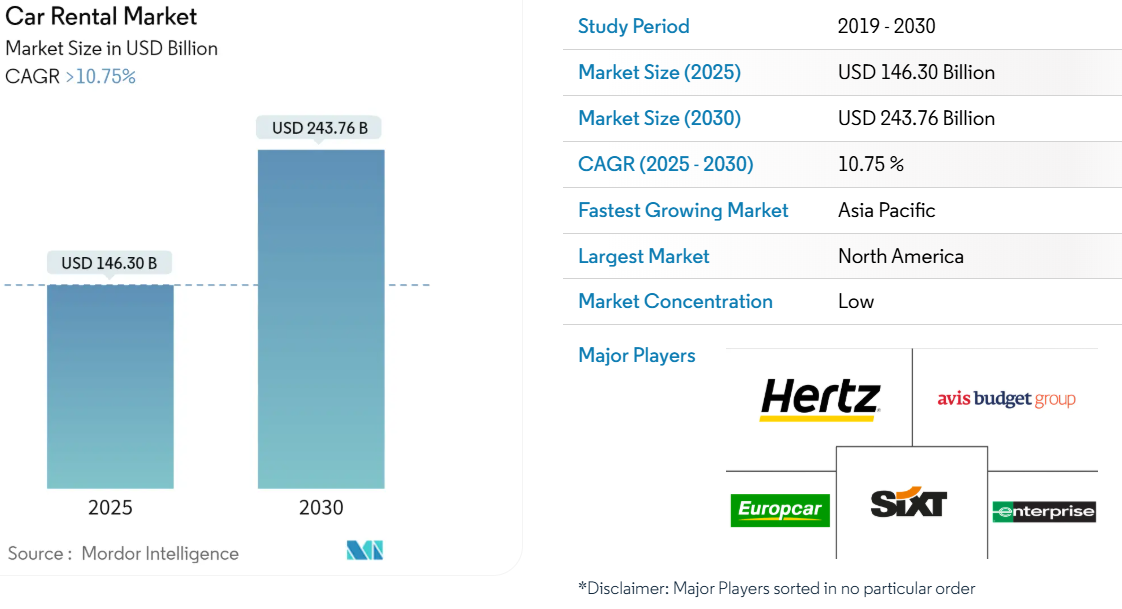
The global car rental market is poised for significant growth, projected to reach USD 146.30 billion by 2025 and further accelerate to USD 243.76 billion by 2030. This upward trajectory, driven by a robust CAGR of over 10.75% during the forecast period, is underpinned by a rebound in tourism, increasing urban mobility demands, and the widespread adoption of digital platforms that offer seamless rental experiences. As consumer expectations evolve, car rental companies are adapting with enhanced technologies, flexible service models, and sustainable vehicle options, positioning the industry for long-term transformation and growth.
Key Trends: Digital Innovation and Evolving User Behavior
1. Surge in Online and App-Based Bookings
One of the most transformative developments in the car rental industry is the rise of online platforms and mobile apps. Over 60% of the global population is now connected to the internet, providing fertile ground for tech-enabled rental solutions. Consumers today seek frictionless experiences—from searching for cars, comparing prices, and reading reviews, to booking and managing rentals via their smartphones. Car rental companies are investing heavily in user-friendly applications and integrating AI and data analytics to offer personalized recommendations, dynamic pricing, and real-time tracking.
2. Bleisure Travel Gains Momentum
Another defining trend is the merging of business and leisure travel—commonly known as “bleisure.” Companies have come to recognize the value of offering employees the flexibility to extend business trips for leisure, thereby improving work-life balance and employee satisfaction. This has led rental providers to offer customizable packages that cater to both corporate requirements and personal travel, expanding their appeal to a broader customer base.
3. Regulatory and Ownership Shifts
Government regulations, particularly in urban areas, are also contributing to market growth. High taxes on personal vehicles, congestion charges, limited parking availability, and environmental mandates are encouraging individuals to explore car rental as a more sustainable and flexible mobility option. Moreover, rising vehicle costs and maintenance burdens are leading many urban dwellers—especially younger populations—to avoid vehicle ownership altogether, favoring on-demand rental services instead.
Market Segmentation: A Multifaceted Industry
The global car rental market is segmented based on several criteria, reflecting the diversity of consumer needs and regional market dynamics:
-
By Booking Type:
-
Offline Access: Traditional bookings through physical counters or agencies.
-
Online Access: Bookings via websites and mobile applications, the fastest-growing segment.
-
-
By Application Type:
-
Leisure/Tourism: Driven by vacationers, domestic tourists, and international travelers.
-
Business: Includes corporate rentals and mobility solutions for professionals.
-
-
By Vehicle Type:
-
Luxury/Premium Cars: Catering to high-end customers and corporate executives.
-
Economy/Budget Cars: Popular among everyday travelers and cost-conscious users.
-
-
By End User:
-
Self-Driven: Dominates due to flexibility and cost-effectiveness.
-
Chauffeur-Driven: Preferred in premium and business segments, particularly in emerging markets.
-
-
By Rental Length:
-
Short-Term Rentals: Typically hourly or daily, suited for quick trips or vacations.
-
Long-Term Rentals: Monthly or longer, gaining popularity among individuals and companies avoiding ownership costs.
-
-
By Geography:
-
North America: The largest market, fueled by tourism, advanced infrastructure, and tech adoption.
-
Europe: Growth supported by environmental policies and mobility-as-a-service (MaaS) integration.
-
Asia-Pacific: Expected to register the highest CAGR, driven by rising urbanization and internet penetration.
-
South America & Africa: Emerging markets with increasing mobile connectivity and urban mobility needs.
-
Get a Customized Report Tailored to Your Requirements. – https://www.mordorintelligence.com/market-analysis/vehicle-rental
Key Players: Innovating for the Future of Mobility
The car rental industry is characterized by strong competition and continuous innovation. Leading companies are adapting to new consumer demands by investing in technology, expanding their vehicle fleets, and entering strategic partnerships:
-
Avis Budget Group Inc. – Known for its broad global reach and innovative use of connected technology.
-
Hertz Global Holdings Inc. – A pioneer in expanding digital services and EV fleet integration.
-
Enterprise Holdings Inc. – Dominates the North American market with a focus on customer service and sustainability.
-
Sixt SE – A European leader recognized for luxury offerings and seamless app-based services.
-
Europcar Mobility Group – Offers integrated mobility solutions across Europe and is expanding into the electric mobility space.
These companies are also exploring eco-friendly initiatives, such as incorporating electric and hybrid vehicles into their fleets, in response to rising environmental awareness and regulatory pressure.
Conclusion: Driving Toward a Connected, Flexible, and Sustainable Future
The global car rental market is well-positioned for substantial growth as it adapts to shifting consumer preferences, urbanization, and digital transformation. With the rise of app-based platforms, demand for sustainable transport, and flexible work-travel lifestyles, rental services are evolving beyond traditional models. Businesses that can innovate in terms of convenience, sustainability, and affordability will be best placed to capture this growing demand.
Industry Related Reports